

Seal it! Guides
Storing leftovers: chill correctly and turn them into tasty meals
What to do with dinner leftovers? A clear routine for cooling, packing and using them up, with tips for different foods.
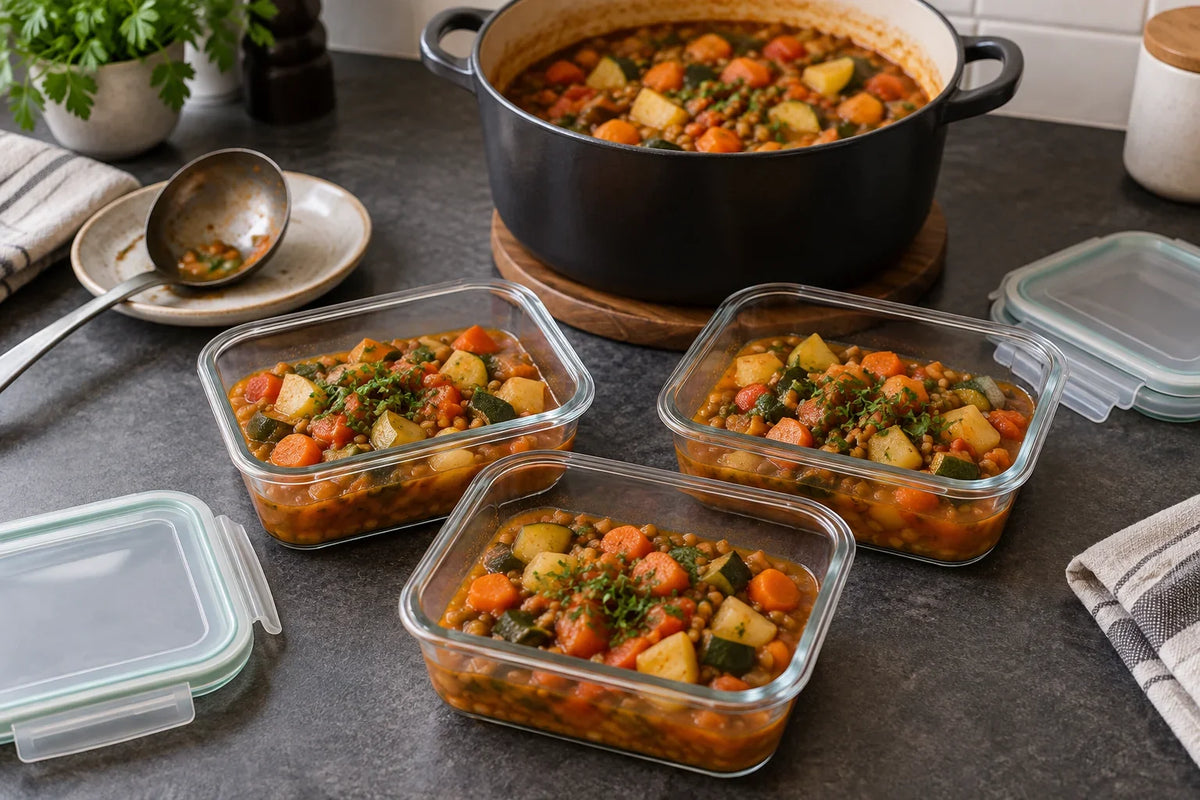
Rice, some vegetables and half a portion of sauce left after dinner? Storing leftovers properly mainly means cooling them promptly and appropriately, packing them so you can keep track of them and deciding now when to eat them. You do not need a weekly plan. A small routine straight after eating helps keep good leftovers from being forgotten at the back of the fridge.
A quick guide: the BfR recommends eating or freezing cooked meals within 2–3 days; dishes with raw components by the next day at the latest. This assumes hygienic preparation and continuous refrigeration. The fridge should be no warmer than 7 °C, preferably 5 °C. A suitable box does not automatically extend these recommendations. Read the BfR recommendation.
Your routine straight after eating
- Decide on a use: tomorrow's lunch, a side or part of a new dish? If you see no use in the next few days, plan to freeze it.
- Make portions: pack the amount you will actually need for the next meal. One large family portion may become two small meals for the next day.
- Cool promptly: divide larger warm quantities between shallow containers. The centre of a whole pot of soup cools more slowly than small portions. Do not leave food on the cooker for hours.
- Close and label: note contents and preparation date. “Vegetable curry, Monday” is more useful than wondering later whether the box is from yesterday or the day before.
- Keep visible: reserve a fixed spot at the front of the appropriate fridge area for food to be eaten next.
For cooling, the BfR recommends bringing warm food below 7 °C within a few hours; shallow dishes help. Do not habitually wait until the next morning. Use a fridge thermometer to check that the chosen shelf is actually cold enough.
Our everyday tip: keep an erasable pen beside the storage containers. If you have to search for labels and a pen, you are more likely to skip labelling. A quick note saves guessing later and helps others in the household choose the right portion.
What should you watch for with different leftovers?
| What is left? | Make the next use easier |
|---|---|
| Rice or pasta | Cool promptly, pack in portions and reheat only what you need. Do not leave in the pot overnight. |
| Soup, stew or sauce | Divide large quantities for cooling. Set aside a small portion separately for the next meal. |
| Cooked vegetables | Store separately from moist sauces where possible. You can then choose between a stir-fry, side dish or soup later. |
| Salad and raw ingredients | Pack separately from cooked components and dressing; eat soon. |
| Cooked meat or fish | Chill promptly and store protected from raw foods. Heat thoroughly in the next dish. |
| Leftover bread | Set aside for a planned use or freeze in portions. Dry bread can still be a useful cooking ingredient. |
Prompt cooling is particularly important for rice and pasta: Bacillus cereus can form spores that survive cooking. Under poor storage conditions, bacteria can multiply and produce heat-stable toxins. Frying incorrectly stored rice again does not reliably make it safe. Read more from the BfR on Bacillus cereus.
A mixed dish does not gain a longer storage time because one ingredient keeps particularly well. For a salad with rice and raw vegetables, consider the sensitive raw components. For pregnant people, small children and people with weakened immune systems, freshly prepared food is a better choice than leftovers stored for longer.
Which containers suit leftovers?
Choose clean, food-safe containers with well-fitting lids. Practicality matters: can you see the contents, serve the portion comfortably and clean every part thoroughly? Two regularly used sizes can be more practical than a cupboard full of mismatched containers without lids.
Opened ingredients are often left over too: with a suitable pesto, pasta sauce or spread jar, our EcoSeal Pro and its included AnySeal System let you vacuum seal directly in the original jar. After serving, clean the rim, position a suitable AnySeal Lid and use the adapter in the sealer, without transferring food. The adapter and three lids are included; check container suitability. For portioned meals, we also offer AnySeal Boxes with date indicators. Original jar or box: opening date, storage and consumption instructions remain decisive.
Vacuum sealing reduces air contact but replaces neither prompt cooling nor refrigeration, and does not turn leftovers into shelf-stable preserves. Low-oxygen storage does not prevent all microbial risks. The BfR explains food stored without air. Our introduction to vacuum sealing food explains what the method can do.
Our recommendation for organised leftovers: AnySeal Boxes
If you regularly have a lunch portion left over, we recommend our glass AnySeal Boxes with date indicators. You can see the contents and note the date directly on the container. The freezer-safe boxes are also useful when you plan ahead to freeze a spare portion; follow fill-level and temperature instructions.
For vacuum sealing, you need the EcoSeal Pro and its included AnySeal Adapter; the sealer is not included with an individual box. Preparation date and consumption plan remain decisive even if you vacuum seal again later.
Taking leftovers to the office or on the go
Put the filled, already chilled box into a cool bag with ice packs just before leaving. Return it to a fridge on arrival. Check beforehand that there is space. A sealed transport container alone does not keep contents cold; a short journey does not solve a subsequent half-day on a desk. gesund.bund.de's food hygiene guidance covers cooling away from home.
Pack sauces separately to keep bread, salad or crunchy components from becoming soggy. Take the portion you intend to eat rather than moving the same large box between home and work daily. For journeys without reliable cooling, choose food suited to those conditions.
Reheating or freezing leftovers
When reheating chilled meals, heat every part to 70 °C for at least two minutes. Stir to avoid cold spots and reheat only the portion needed. Reheating does not reset storage time. gesund.bund.de explains this temperature requirement.
When freezing leftovers, also label portions with the freezing date. Use freezer-safe containers and follow their fill and temperature instructions. Liquids need room to expand. A shallow portion is often easier to store than a tall, half-full container. The BZfE explains freezer storage at −18 °C. Freeze while the food is still sound, not as a rescue after incorrect storage.
Turn small leftovers into a new meal
Rather than seeking a separate recipe for every leftover, combine a filling base, vegetables and seasoning. These ideas are for hygienically stored food still in good condition:
- Leftover roasted vegetables: combine with freshly cooked lentils and herbs for a warm bowl, or turn into soup with stock.
- Cooked potatoes: slice, fry with onions and serve with a freshly made herb dip.
- A little tomato sauce: use as a base for a small pan of beans or as sauce for freshly cooked pasta.
- A small portion of rice: combine with fresh vegetables in a rice stir-fry, heating thoroughly throughout.
- Dry, mould-free bread: use for croutons, breadcrumbs or a savoury bread bake.
A leftover meal need not look like the original dinner. Start your shopping list with what you have and add only what is missing for its next use. The BZfE offers more everyday leftover ideas and routines.
When should you discard leftovers?
Discard leftovers with mould, unusual changes or known prolonged incorrect storage. A normal smell is not proof of safety. If you cannot establish when the food was prepared and how it was chilled, neither a new lid nor vacuum sealing it again will help.
The most effective step for tomorrow is simple: after eating, pack a suitable portion, cool it correctly and decide how to use it. To organise shopping and pantry supplies too, our guide to helping food keep longer covers suitable methods for different foods.
To stop portions disappearing at the back, see organising your fridge for five tips on storage locations, visibility and an “eat first” zone.
More ideas for everyday life
You might also enjoy
Shelf life
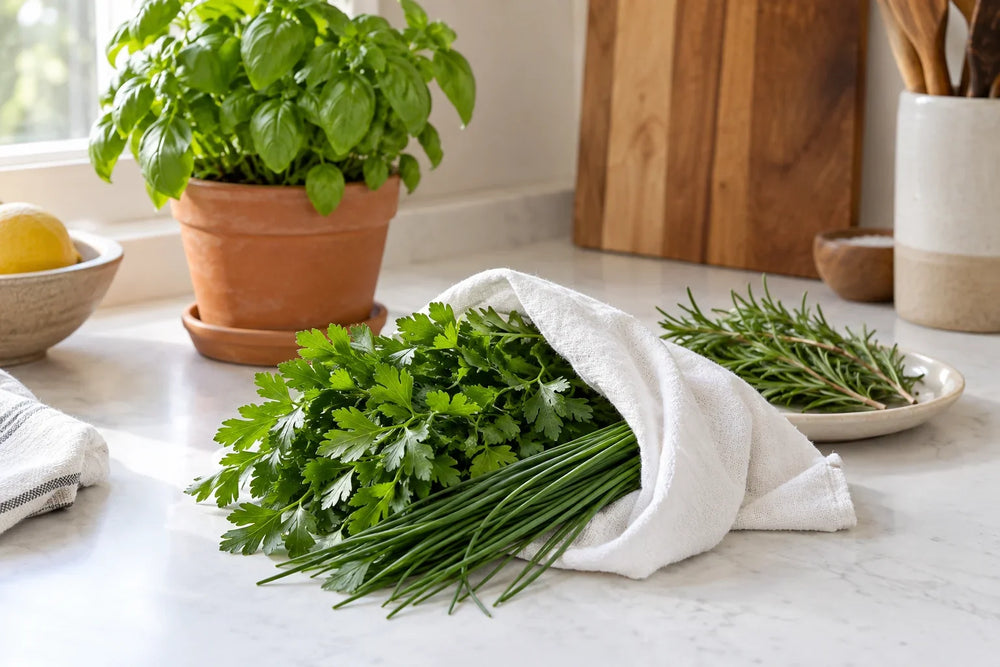
Keeping herbs fresh: storing basil, parsley and chives correctly
Half a bunch of parsley need not disappear in the vegetable drawer. Learn which herbs need chilling, why basil is different and how to use up any extra.
Read guide
Shelf life
Keeping salad fresh: whole heads, washed leaves and bagged salad
Whole heads need different handling from washed leaves and ready-cut bags. Prepare salad to suit your next meal.
Read guide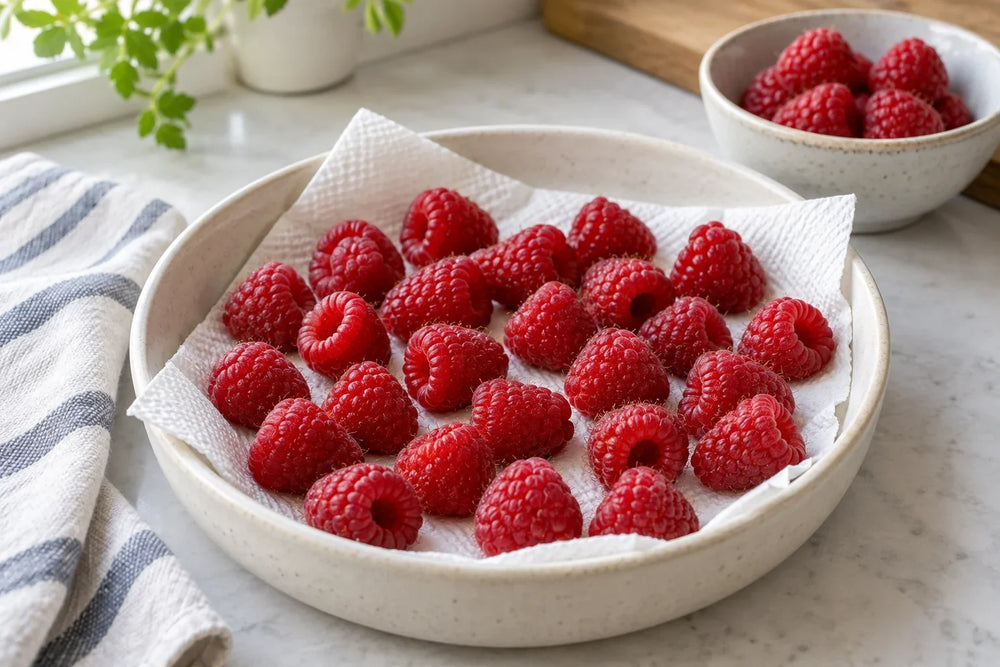
Shelf life
Helping raspberries keep longer: refrigerate or freeze?
Fresh for tomorrow or stored in the freezer? Protect delicate raspberries from pressure and prepare them for their intended use.
Read guide