

Seal it! Guides
Vacuum sealing food: benefits, suitable foods and limits
What does vacuum sealing really offer? Find packaging that suits your food and learn which storage rules still apply.
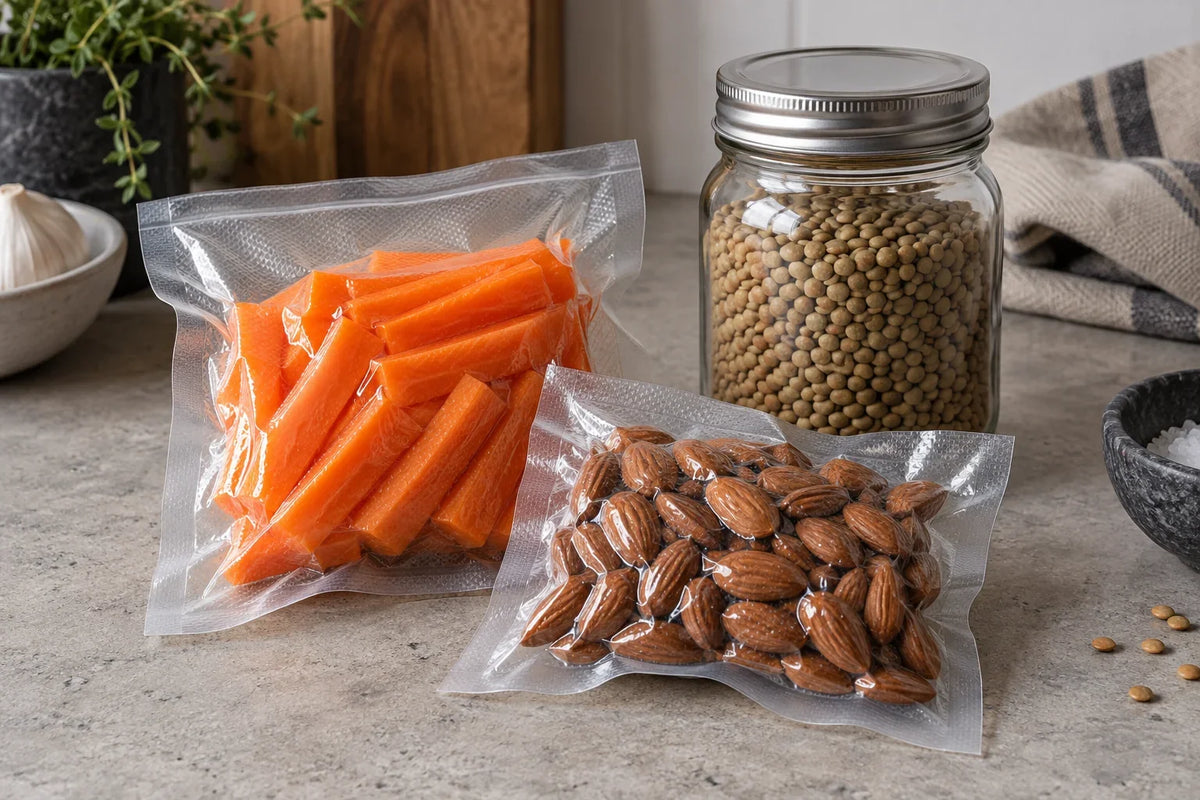
Vacuum sealing food means removing air from suitable packaging or a container. Less oxygen can slow oxidation and certain losses in quality, such as fatty pantry foods becoming rancid. It makes most sense when you deliberately portion food and store it appropriately afterwards. It does not turn perishable food into a shelf-stable preserve.
You do not need prior knowledge of equipment: first decide what you want to store. Dry pantry ingredients, a portion for the freezer and a delicate snack have different packaging and storage requirements. Here is a guide to choosing for everyday cooking.
What does vacuum sealing actually offer?
Vacuum sealing creates reduced pressure: some air is removed from the bag, jar or box. This leaves less oxygen available for certain reactions. Nuts, for example, contain fats that can become rancid on contact with oxygen. Reducing air contact addresses that issue. Vacuum packaging can also help limit freezer burn in suitable frozen portions. Storage planning remains crucial. The result always depends on the combination of food, packaging and storage. The BZfE explains how air affects spoilage; TÜV SÜD describes vacuum packaging and freezer burn.
Three practical questions are more useful than a blanket freshness promise: do you often have opened supplies? Do you want to store portions separately? Or do you need packaging for planned freezer portions? If you use everything immediately anyway, you do not need an extra vacuum-sealing step.
For example, if you use nuts only occasionally as a topping, several small labelled jars may be more practical than one large pack opened repeatedly. For food you finish every day, this organisational benefit matters much less.
Which foods can you vacuum seal?
The overview below helps you choose; it is not a shelf-life table. Also check the equipment instructions and the food's storage guidance. “Can technically be packaged” and “can be stored safely under these conditions” are separate questions.
| Food | Where packaging may help | What to watch for |
|---|---|---|
| Dry pantry food, such as rice, oats or nuts | Keep small quantities separate and easy to identify. | Use only dry, sound food and follow its storage instructions. A vacuum does not dry moist food. |
| Meat and fish | Pack portions for planned cooking or freezing. | Maintain the cold chain and observe use-by dates; escaping juices must not enter the sealer. |
| Bread and soft foods | Prepare portions to suit their use. | A close-fitting bag can compress contents. Check containers or a suitable gentle equipment setting. |
| Cooked food and leftovers | Close ready-to-eat portions cleanly. | Cool promptly, refrigerate and eat soon; for longer storage, freeze the food using a suitable method. |
| Soups and sauces | Pack portions in approved containers or with suitable chamber equipment. | Liquid and sealer must be compatible. A bag sealer is not automatically suitable for liquids. |
For fruit and vegetables, first check normal storage: not every variety belongs in the same place. The German Federal Centre for Nutrition shows suitable storage locations. A vacuum closure does not make an unsuitable location suitable.
What should you not simply vacuum seal for storage?
Do not repackage spoiled food or food with an uncertain storage history to “rescue” it. Nor is removing air a process for safely producing unrefrigerated canned vegetables. Homemade oil infusions, low-acid dishes and moist foods in particular need an appropriate preservation method.
The German Federal Institute for Risk Assessment explains in its botulism guidance that certain bacteria can produce toxins without oxygen. Smell and appearance do not reliably rule this out. Do not equate vacuum-sealed jars with preserves made using a tested process.
How long does vacuum-sealed food keep?
A universal figure would be misleading. Initial condition, hygiene, temperature, composition and packaging vary. A table that simply multiplies storage days would hide those differences. Do not automatically plan extra fridge days just because you removed air.
A best-before date applies to an unopened, correctly stored product. Additional consumption instructions may apply after opening. For highly perishable food, the use-by date is decisive; do not eat it after that date. The BZfE explains food shelf life.
When transferring food, write the original opening or preparation date on the container. You can add the vacuum-sealing date, but it does not replace the first date. Arrange portions so those needing to be eaten first are at the front. That makes the next step visible when you open the fridge.
Bag, jar or box: what suits your plan?
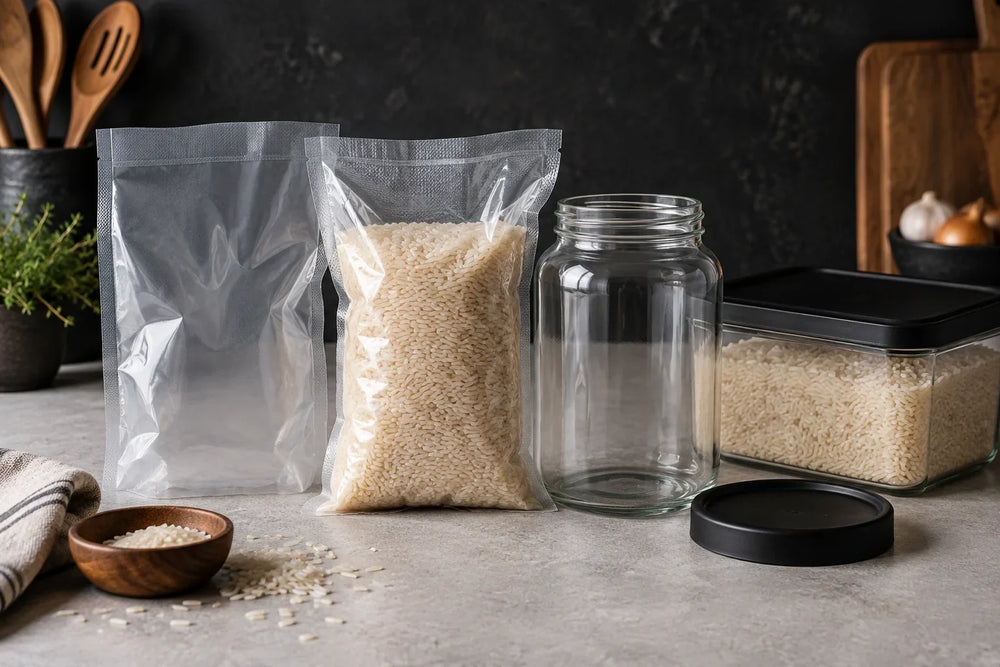
Bags are an option for heat-sealing individual portions. Material must be explicitly suitable for freezing or cooking if used for those purposes. Jars and boxes suit people who prefer serving from a rigid container, cleaning it and reusing it. A jar takes up roughly the same space empty as full, however.
Consider not only packing but serving later. Using a spoon in a tall jar is different from eating from a shallow box. A rigid container may be better for delicate foods than close-fitting film. We explain the differences in our vacuum sealer buying guide: bag, chamber or jar.
Our EcoSeal Pro: directly in the original jar, without transferring food first. Its included AnySeal System lets you vacuum seal many suitable supermarket jars directly. For example: serve some pesto, clean the rim, position a suitable AnySeal Lid and vacuum seal with the adapter in the sealer. The contents stay in the original jar. Empty, cleaned jars can hold new supplies later. For this routine, we recommend the EcoSeal Pro including AnySeal Adapter and three lids. Check the container and lid combination and continue following storage and consumption instructions after opening. For heat-sealed bags, choose a system designed for that purpose.
Finding a routine that is worthwhile
- Choose a specific need. Start with one dry pantry ingredient rather than the whole fridge.
- Decide quantity and storage location. The portion should match what you actually use.
- Prepare packaging and label. Clean sealing surfaces, undamaged parts and readable dates make checking easier.
- Follow your system's instructions. For EcoSeal Pro, find the steps in our jar vacuum-sealing guide.
- Assess everyday use. Is serving convenient and does the food stay visible? Then add more suitable containers.
Frequently asked questions about vacuum sealing food
Can I store vacuum-sealed food without refrigeration?
Only if the food is suitable for that storage independently of the vacuum. Food already requiring refrigeration still belongs in the fridge. Vacuum sealing alone does not create a shelf-stable preserve.
Is vacuum sealing the same as canning?
No. Vacuum sealing removes air; canning includes heat treatment suited to the food. Our guide to helping food keep longer helps you choose a method.
Do I need to vacuum seal again after each use?
Air flows back in when you open the jar. To store under vacuum again, close and vacuum seal the container again as instructed. This does not reset its shelf life.
More ideas for everyday life
You might also enjoy
Vacuum sealing
Which vacuum sealer suits you? Comparing bag, chamber and jar systems
Bag portions, soups or pantry jars: compare systems by your kitchen routine and choose one that actually suits you.
Read guide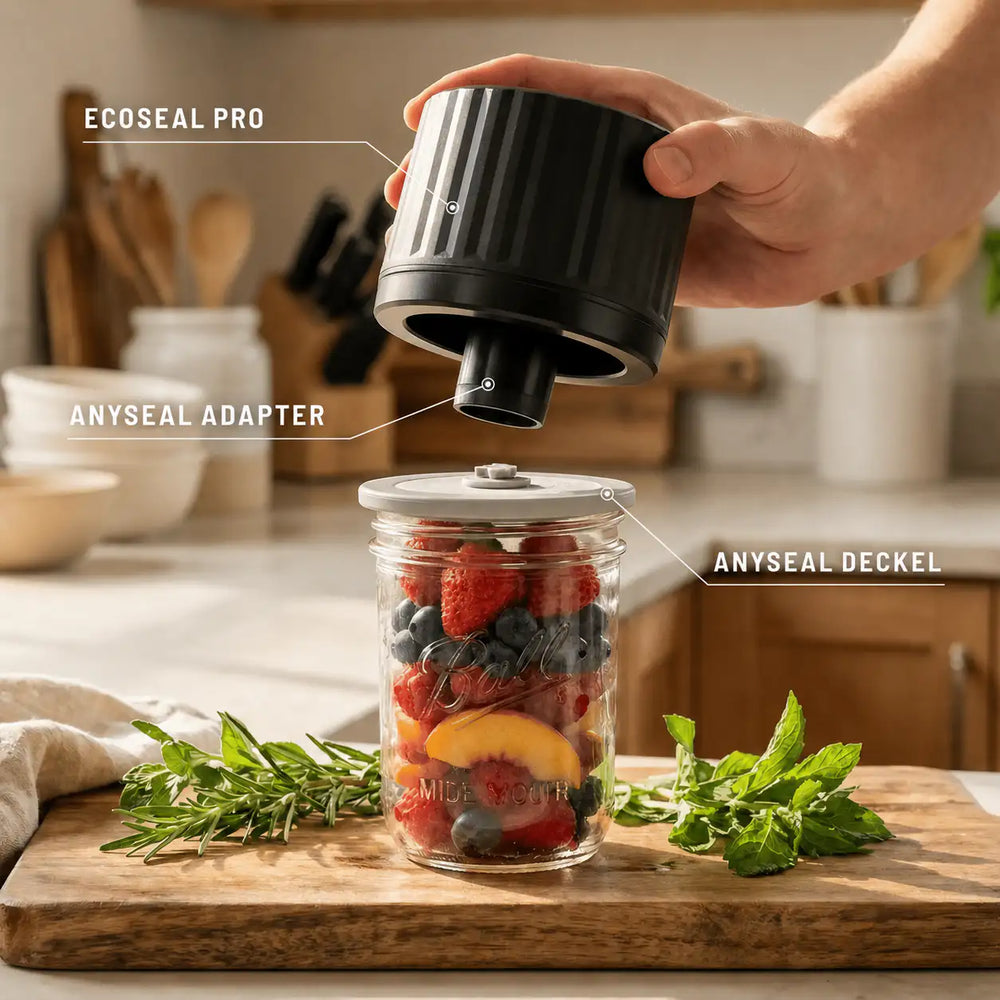
Jars & accessories
Which jars are suitable for vacuum sealing?
Not every screw-top jar automatically fits. Compare containers, lids and adapters to find the combination you actually need.
Read guide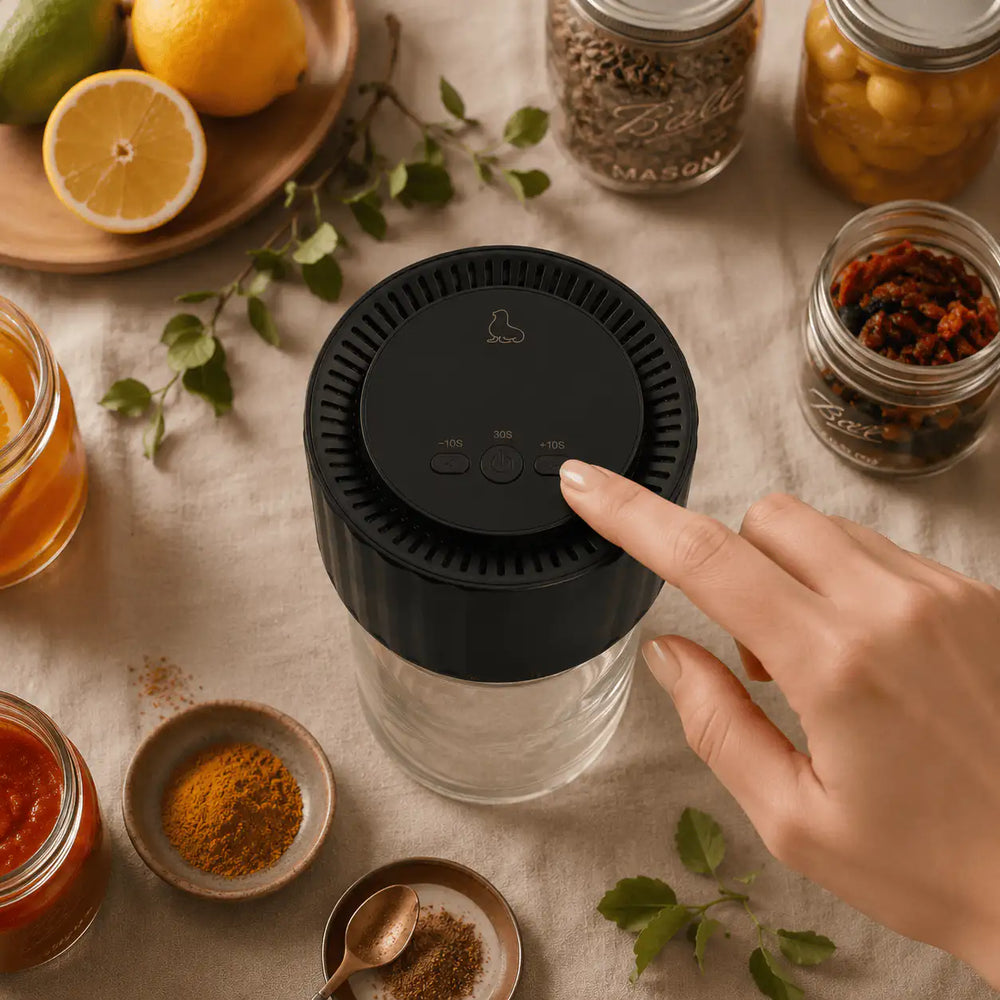
Vacuum sealing
Vacuum sealing jars: a guide for everyday cooking
From the right lid to correct storage: make vacuum sealing jars a simple routine, with clear limits for safe food storage.
Read guide