

Seal it! Guides
Vacuum sealing jars: a guide for everyday cooking
From the right lid to correct storage: make vacuum sealing jars a simple routine, with clear limits for safe food storage.
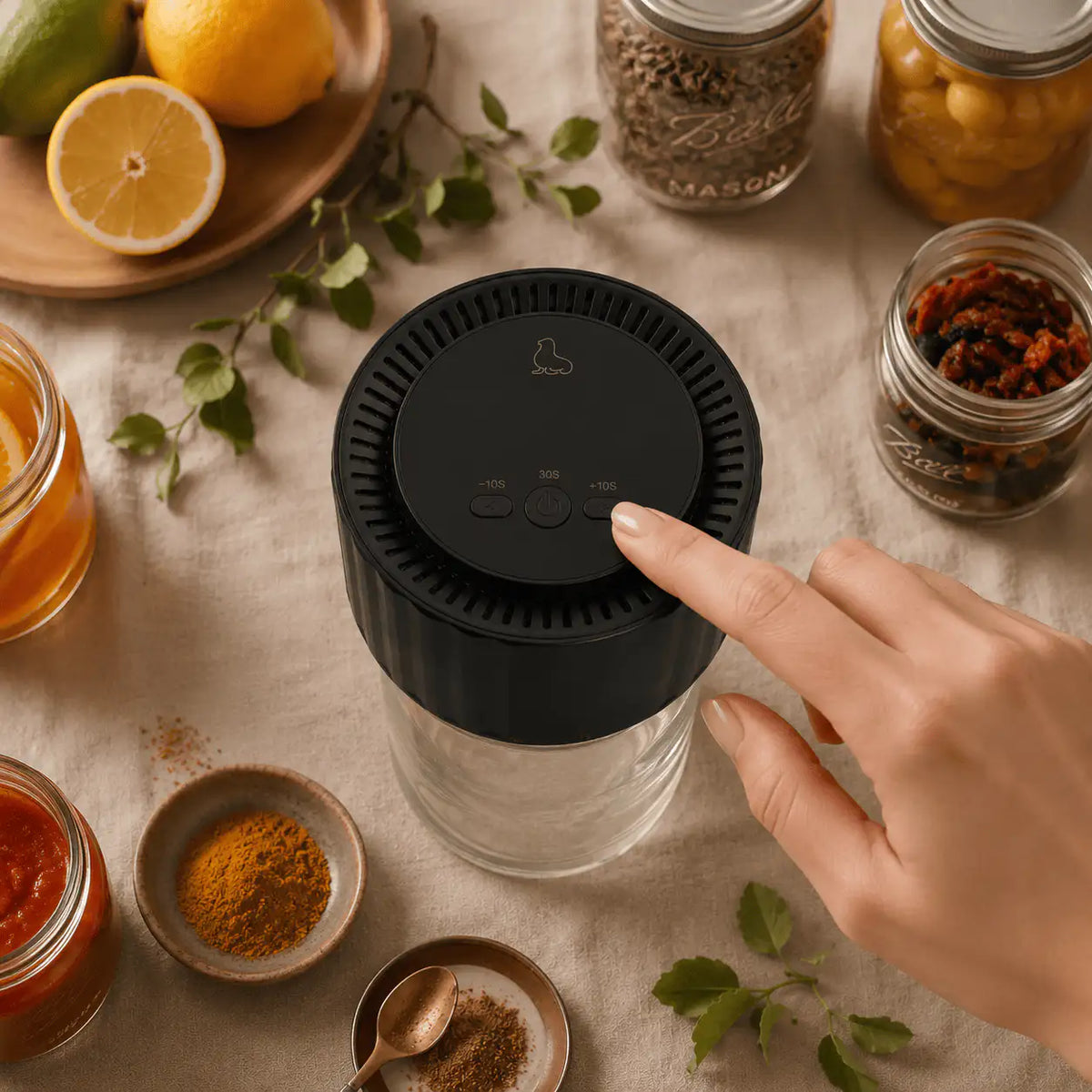
Want to keep opened food organised or reuse suitable jars regularly? Vacuum sealing removes air from a suitable closed container, making it a practical addition to your storage routine. Three things matter: the jar and lid must fit together, the rim must be clean and the food must still be stored correctly.
First things first: vacuum sealing is neither canning nor sterilisation. Foods requiring refrigeration still need refrigeration. A firm lid tells you something about the closure, but not whether the contents are safe to eat.
Want to understand what vacuum sealing offers first? Our introduction to vacuum-sealed food explains benefits, suitable uses and storage.
What do you need to vacuum seal a jar?
For the Seal it! system, you need the EcoSeal Pro with its included AnySeal System and a suitable container. The AnySeal Adapter and three lids are already included. This lets you reuse many suitable supermarket jars directly, without transferring their contents. Empty, cleaned jars can also hold new supplies. Alternatively, you can vacuum seal compatible Seal it! jars directly with their intended original lids. First check your jar's suitability and fit.
- An undamaged, clean jar in a sensible portion size.
- The matching lid with an intact sealing surface.
- The adapter intended for your combination.
- A label or erasable pen for contents and date.
- A clean filling funnel if needed.
Keep the supplied instructions to hand too. How you position the lid before pumping depends on the closure system. A twist-off lid, a Mason Jar sealing disc and an AnySeal Lid are not interchangeable ways of operating the system.
Vacuum sealing jars in six steps
- Decide on the food and storage location. Before filling, decide what goes in the jar and where it belongs afterwards. Plan to use perishables promptly; a vacuum does not reset their shelf life.
- Check jar and lid. Inspect the rim, jar wall and seal. Do not use containers with cracks, chips or distorted lids. Clean all parts according to the manufacturer's instructions.
- Fill with space below the lid. Observe the fill level specified for your system. Contents must not dirty the sealing surface or enter the sealer. Fine powders and liquids need particular care; explicitly follow the equipment instructions for these.
- Clean the sealing surface and prepare the lid. Remove all crumbs and food residue from the jar rim. Fit or position the lid exactly as instructed for that closure.
- Position the sealer and start. Use the correct adapter, position the EcoSeal Pro correctly and start vacuum sealing. For your own suitable containers, place the AnySeal Lid on top and use the AnySeal Adapter.
- Check the closure, label and store. Check that the lid holds as instructed. Label the jar with contents and preparation or opening date, then put it straight into its intended storage location.
One jar is enough for an easy first routine: for example, dry muesli from an opened pack, stored according to its label. This lets you learn the process without transferring large quantities. Expand your system once opening, serving and resealing work well in everyday use.
Where does food belong after vacuum sealing?
| Contents | What matters |
|---|---|
| Dry products labelled for unrefrigerated storage | Keep dry and follow the packaging instructions; a vacuum does not replace suitable surroundings. |
| Cooked meals and other foods requiring refrigeration | Maintain the cold chain and plan when to eat them. For longer storage, choose a suitable freezing method. |
| Homemade moist foods intended for the pantry | A vacuum alone does not make them shelf-stable. A tested preservation process suited to the food is required. |
The last row is particularly important: a jar under vacuum looks similar to a canned preserve, but it has been prepared differently. The BfR explains why low-oxygen conditions do not rule out certain hazards and why smell or appearance alone cannot guarantee safety. Read the BfR information on botulism.
If the jar does not hold a vacuum
Start with the fit and work through the checks systematically. Clean the rim, inspect the seal and reposition the sealer and adapter correctly. If the problem persists, test the same equipment combination with another jar confirmed to be compatible. This helps narrow down whether the container or operation is the cause.
Replace a damaged lid rather than compensating with extra pumping cycles. Nor does a random screw-top jar become suitable because it is roughly the same size. Our jar compatibility guide helps you distinguish opening, closure and adapter.
Open, serve and reseal
Example: pesto in its original jar. Take a portion, clean the rim and replace the original screw lid with a suitable AnySeal Lid. Use the AnySeal Adapter in the EcoSeal Pro to vacuum seal the suitable jar as instructed. There is no need to transfer the pesto. Afterwards, the label's refrigeration and consumption instructions still apply; the jar has not become an unopened preserve again.
Open the jar using the method intended for its lid, without bending the rim or sealing surface. Use clean utensils to serve food. Check the rim again before resealing. Keep the original opening or preparation date on the label; add the new vacuum-sealing date only as extra information.
Smaller portions are practical for ingredients you use occasionally. For breakfast supplies opened daily, an ordinary storage jar with a good closure may already suit you. Choose a routine that matches how you cook, rather than automatically vacuum sealing every jar after every use.
Frequently asked questions
Can this replace canning?
No. Removing air is not adequate heat treatment. For canning, use only suitable equipment and reliable instructions matched to the food.
How long does vacuum-sealed food keep?
There is no credible universal figure. Initial condition, food, temperature and handling vary. Follow existing storage and consumption instructions and do not allow extra days solely because of the vacuum.
Do I always need AnySeal?
No. Compatible Seal it! jars work directly with their intended original lids. For your own suitable containers, use the AnySeal Adapter and a suitable AnySeal Lid. The current EcoSeal Pro already includes the adapter and three lids. Only if these parts are missing from an older sealer you own is the AnySeal Extension Set a suitable addition.
Start directly in your own jar with EcoSeal Pro
Want to use this routine regularly? We recommend our EcoSeal Pro with the AnySeal System included as standard. Reuse a suitable pesto or pasta sauce jar, take a portion and vacuum seal again, without transferring food to another container. Empty, cleaned jars can become storage jars for new supplies too.
The AnySeal Adapter and three lids are already included. If you would rather add matching jars, choose our VacuJars for use with their intended original lids.
Sources and further guidance
More ideas for everyday life
You might also enjoy
Vacuum sealing
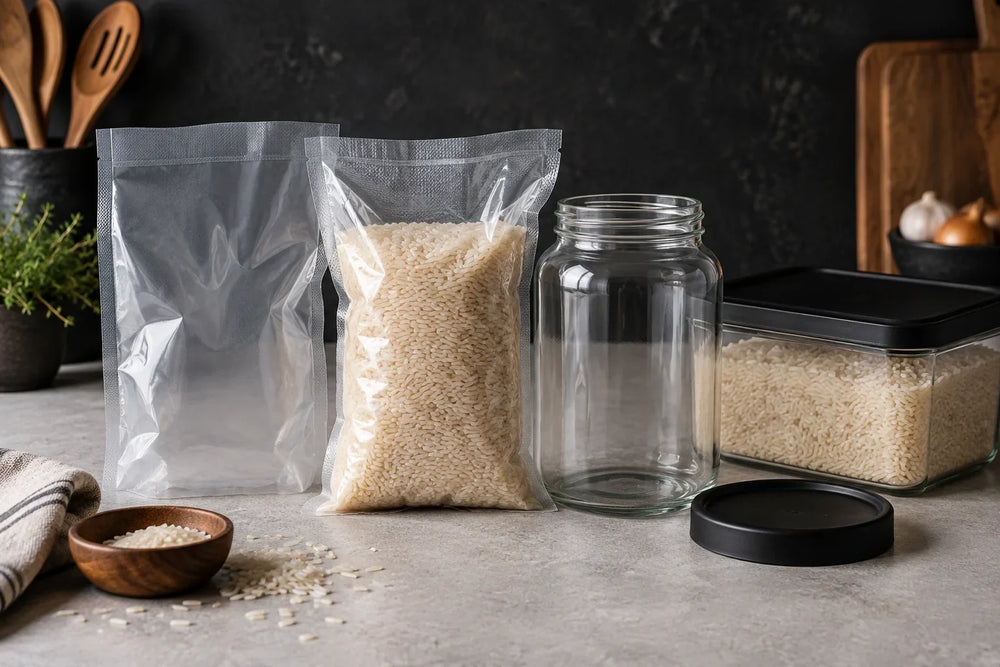
Which vacuum sealer suits you? Comparing bag, chamber and jar systems
Bag portions, soups or pantry jars: compare systems by your kitchen routine and choose one that actually suits you.
Read guide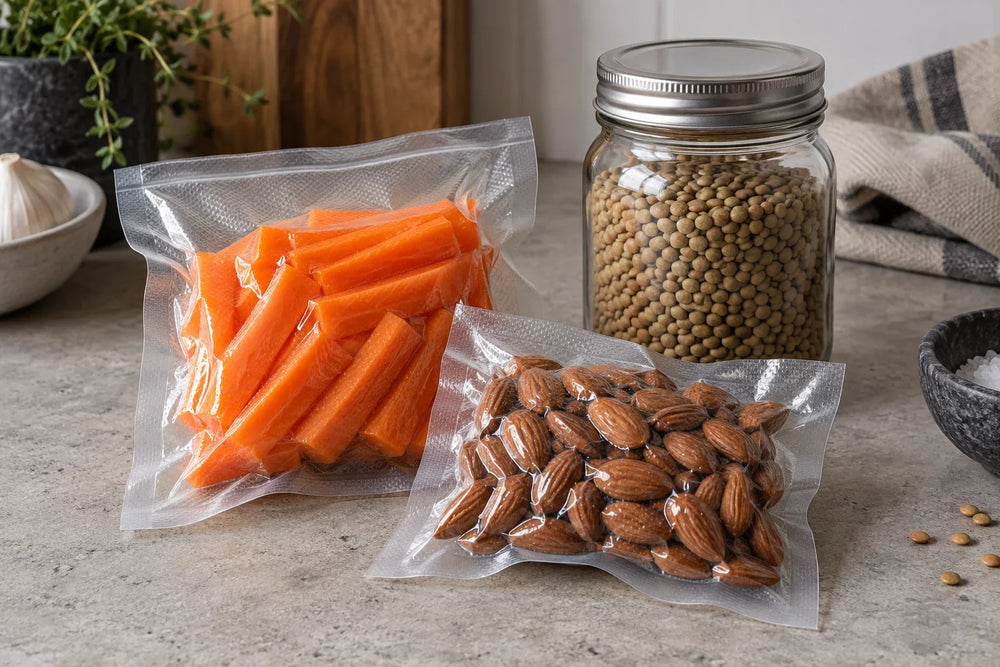
Vacuum sealing
Vacuum sealing food: benefits, suitable foods and limits
What does vacuum sealing really offer? Find packaging that suits your food and learn which storage rules still apply.
Read guide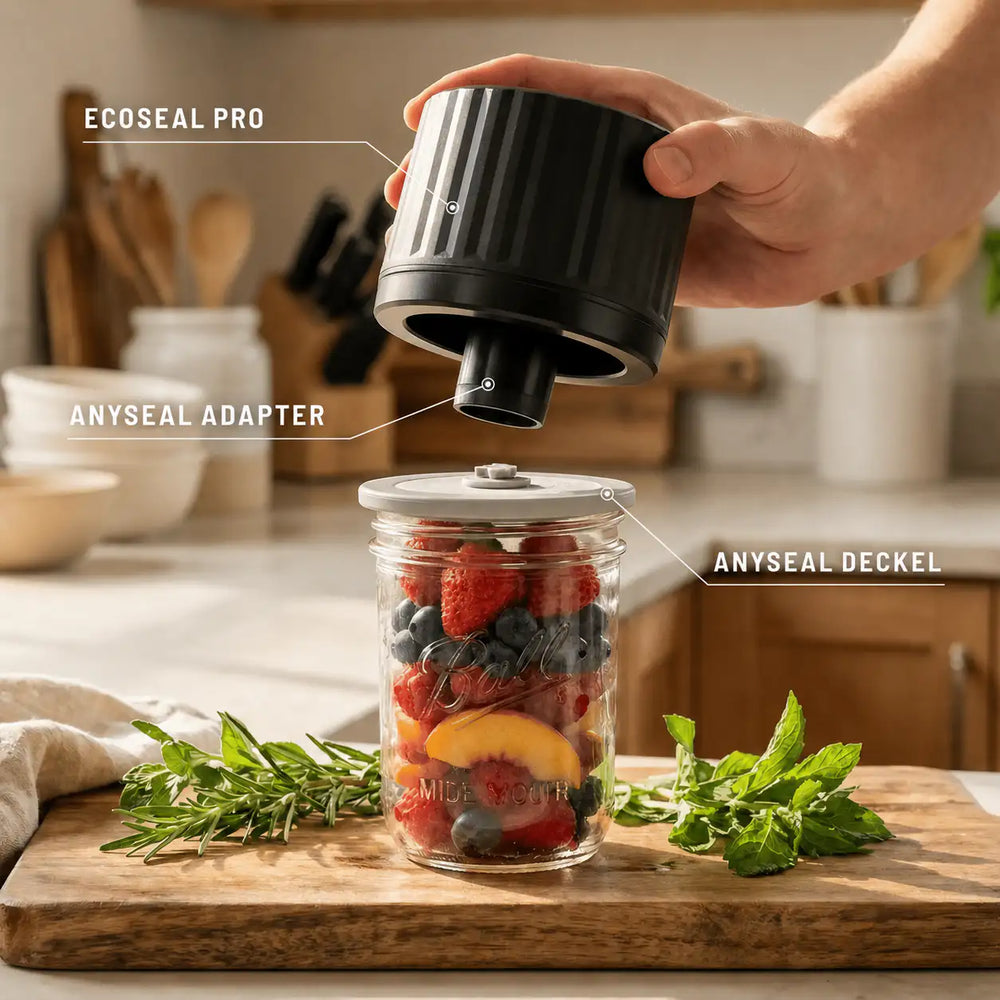
Jars & accessories
Which jars are suitable for vacuum sealing?
Not every screw-top jar automatically fits. Compare containers, lids and adapters to find the combination you actually need.
Read guide