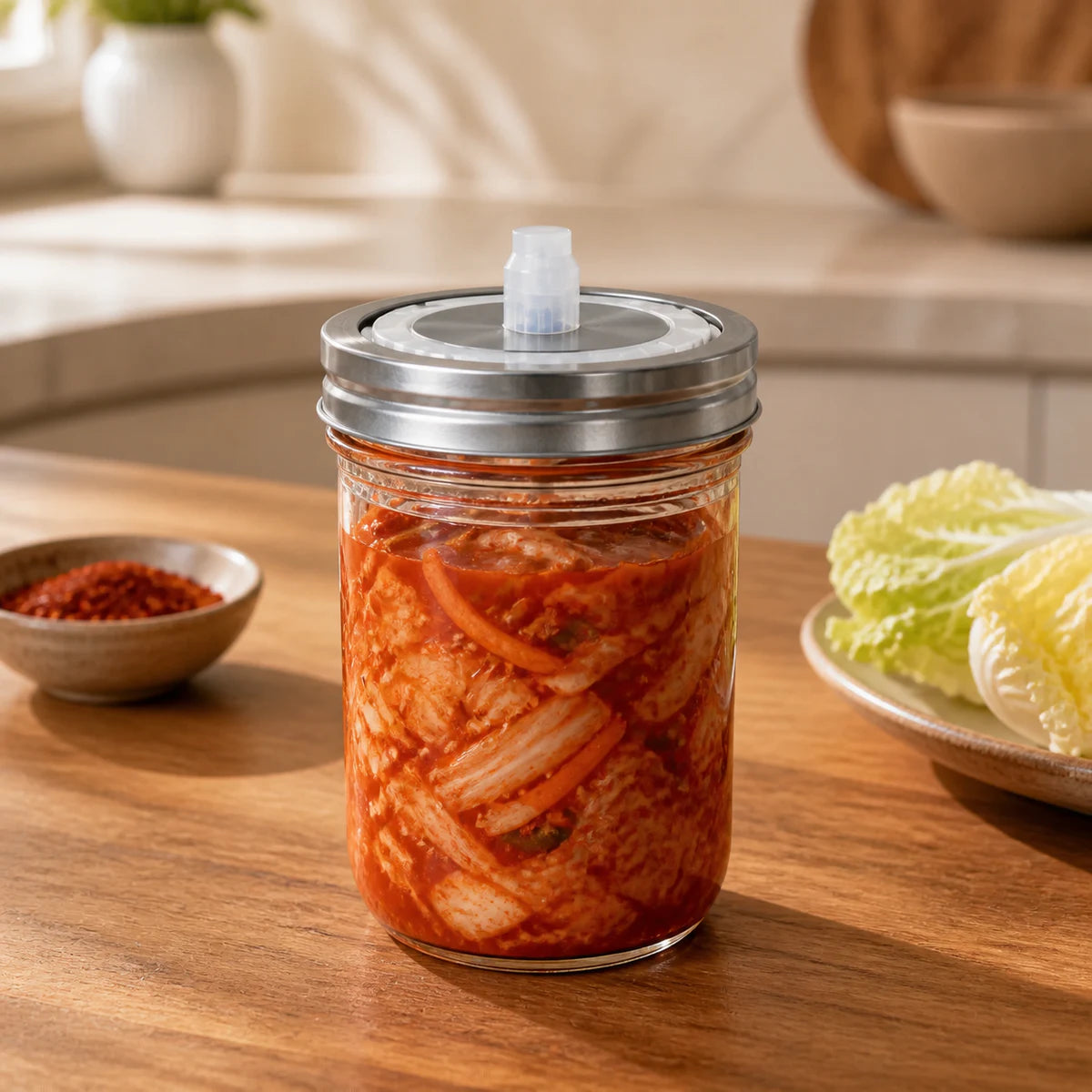
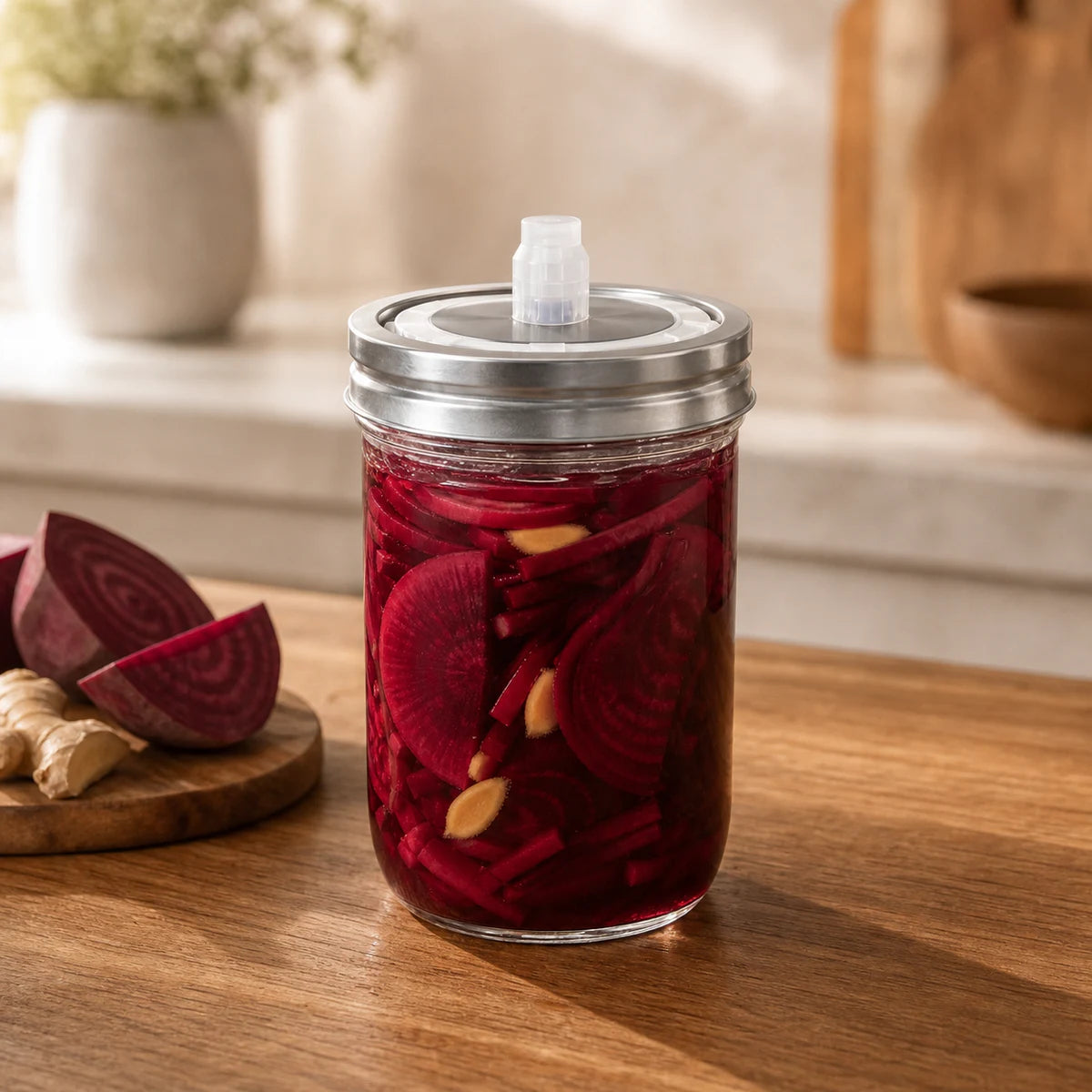
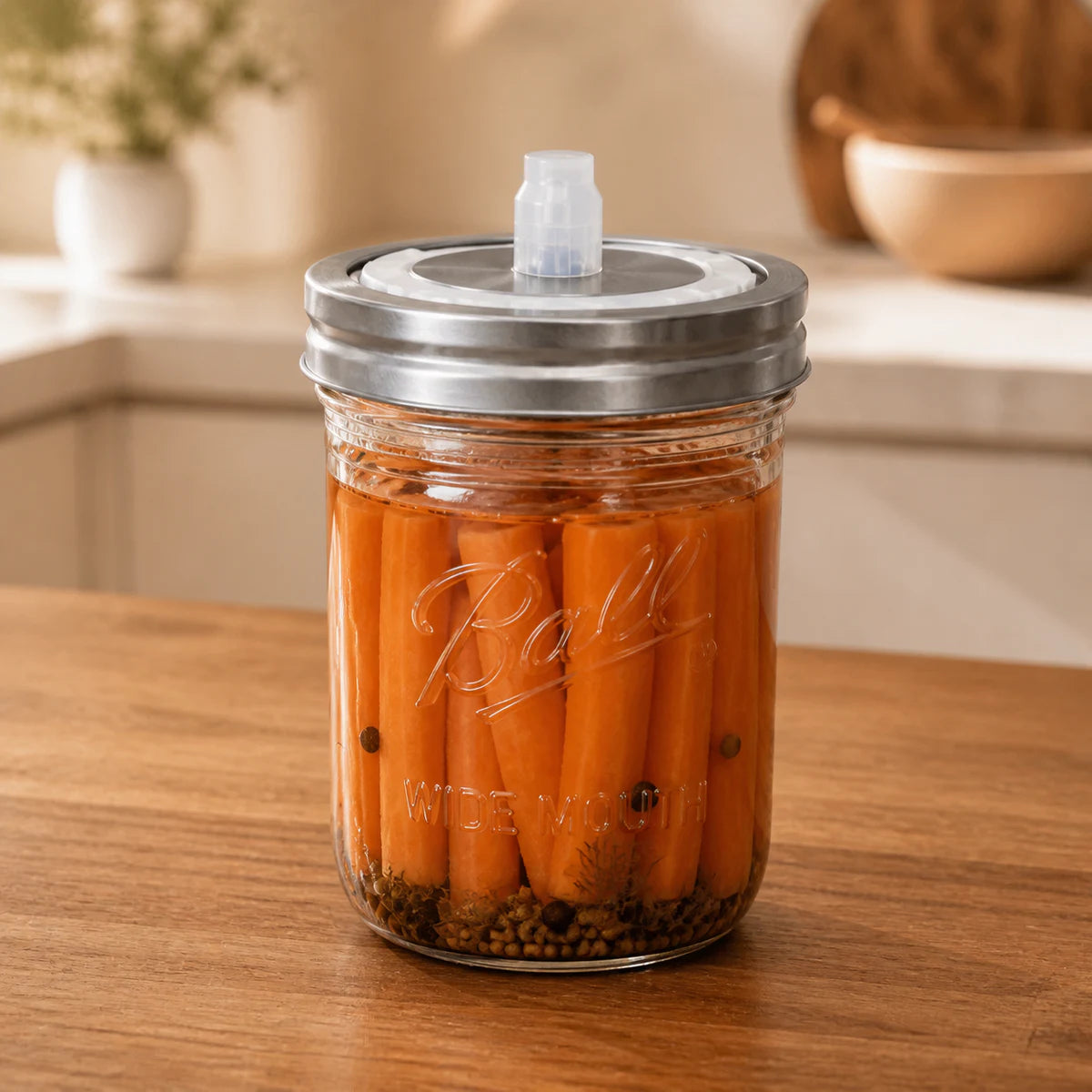
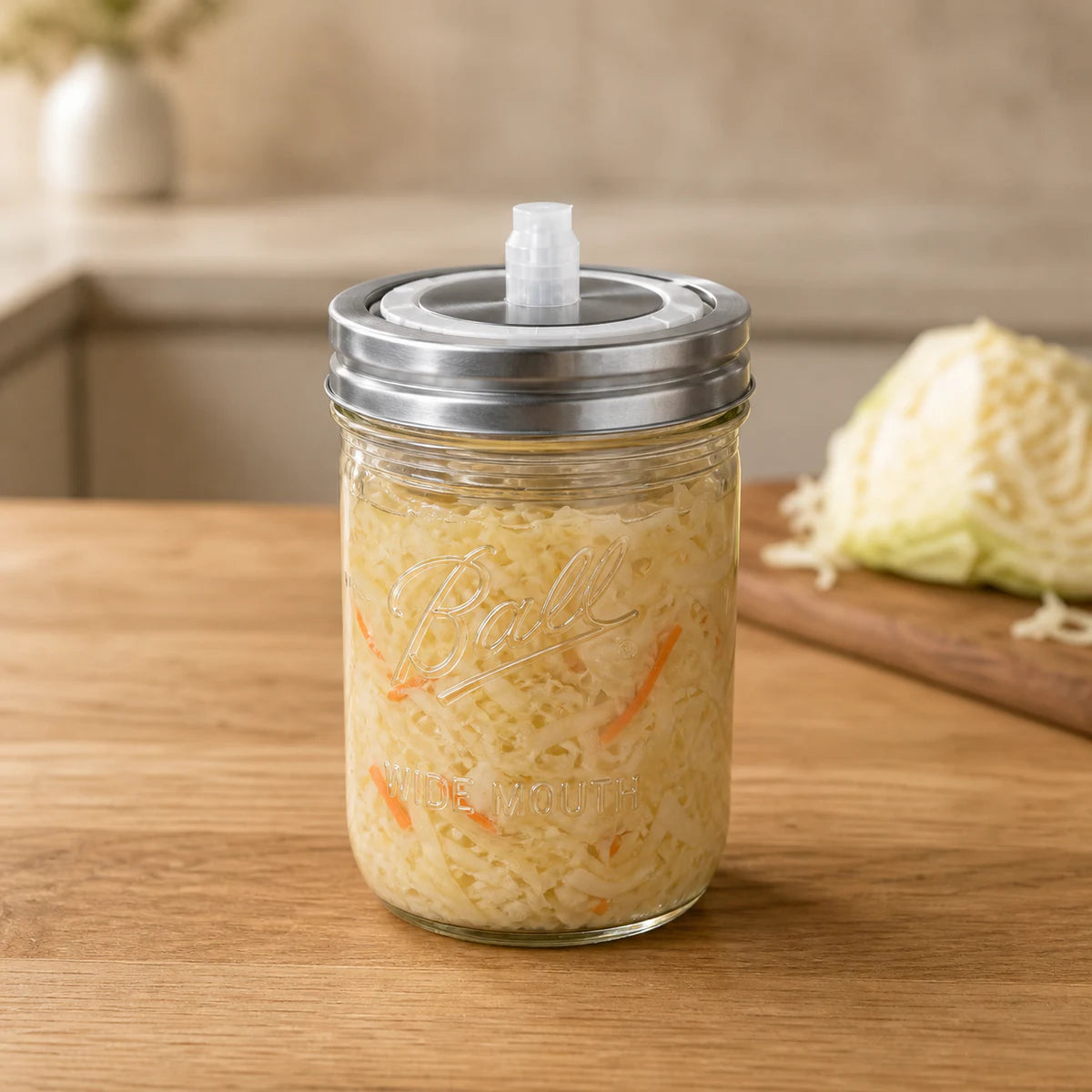
1. Prepare salt or brine
For cabbage, 2% salt based on the weight of the vegetables is a good starting point. For carrots, cucumbers or beetroot, a 2.5 to 3% brine usually works well.
Seal it! guide to your Fermentation Set
With the Seal it! Fermentation Set, you can ferment vegetables easily, cleanly and without opening the jars every day. The system of a Wide Mouth Ball Mason Jar, glass weight and fermentation lid reliably keeps the contents below the brine while allowing fermentation gases to escape automatically.

2-3 %Salt
5-7 daysTime
18-22 °CTemperature
Quick start
If you already have your set, these four steps are all you need to get started.
For cabbage, 2% salt based on the weight of the vegetables is a good starting point. For carrots, cucumbers or beetroot, a 2.5 to 3% brine usually works well.
Pack the jar tightly and press the vegetables down evenly. This reduces air pockets and helps you use the space in the jar better.
Place the glass weight and fermentation lid on the jar, then tighten the Ball Mason screw band until hand-tight.
The valve lets CO2 escape as it forms. You do not need to open the jar every day. Taste from day 4 or 5 and refrigerate once the flavor and acidity are right for you.
Why the set helps
For beginners, problems often come from the setup rather than the recipe: vegetables float to the surface, too much air reaches them or the jar is opened more often than necessary.
The glass weight keeps vegetables reliably below the brine. This lowers the risk of unwanted surface growth and keeps your ferment more stable.
The fermentation lid lets gases escape without you having to intervene constantly. This makes everyday use easier and keeps the process more consistent.
The set is designed for Wide Mouth Ball Mason Jars with a standard screw band. You work with a clear setup instead of improvised solutions.
Instructions
From preparation to refrigeration, here is how to use the Seal it! Fermentation Set in everyday life.
Wash, trim and cut the vegetables. Even pieces are easier to layer in the jar and stay below the brine more reliably.
Cabbage is mixed with salt until liquid is released. Chunky vegetables are later covered with brine. Fill the jar evenly and gently press the contents down.
The vegetables should be fully covered with liquid. Also leave about 2 to 3 cm of headspace so there is enough room during fermentation.
Insert the glass weight so the vegetables stay below the brine. This reduces the risk of unwanted surface growth.
Put on the fermentation lid and tighten the screw band until hand-tight.
Let the jar ferment at 18 to 22 °C. Taste from day 4 or 5. Once flavor and acidity are right, place it in the fridge.
Safety
Normal fermentation often looks lively. The key is to distinguish typical activity from real warning signs.
Recipe
Carrots are ideal for getting started because they are robust, stay stable below the brine and quickly give you a feel for fermentation.
Hand-tight is enough. The lid should sit securely, but it should not be tightened excessively.
Yes, this can happen during active fermentation, especially if the jar is very full or fermentation becomes vigorous. It is best to place the jar on a plate or in a bowl.
The Seal it! Fermentation Set is designed for Wide Mouth Ball Mason Jars. Other jars may not work reliably with the weight, lid and screw band.
No. The fermentation lid lets CO2 escape as it forms, so you do not need to open the jar every day.
It helps you press vegetables down evenly, reduce air pockets and fill the jar more neatly. This is especially helpful with cabbage or very tightly packed jars.
Press the vegetables back below the brine, reposition the glass weight and add a little brine if needed. Take any vegetables that remain exposed above the liquid for an extended period seriously.
As soon as the flavor and acidity are right for you. Cold slows fermentation down significantly and stabilizes the current state.
Rezepte
Vier einfache Fermente aus dem alten Guide, direkt mit den passenden Schritt-für-Schritt-Rezepten verlinkt.
Bitte Salzmenge, Temperatur und Reifezeit des jeweiligen Rezepts einhalten. Gemüse während der Fermentation vollständig unter Lake halten.