

Seal it! Guides
Which vacuum sealer suits you? Comparing bag, chamber and jar systems
Bag portions, soups or pantry jars: compare systems by your kitchen routine and choose one that actually suits you.
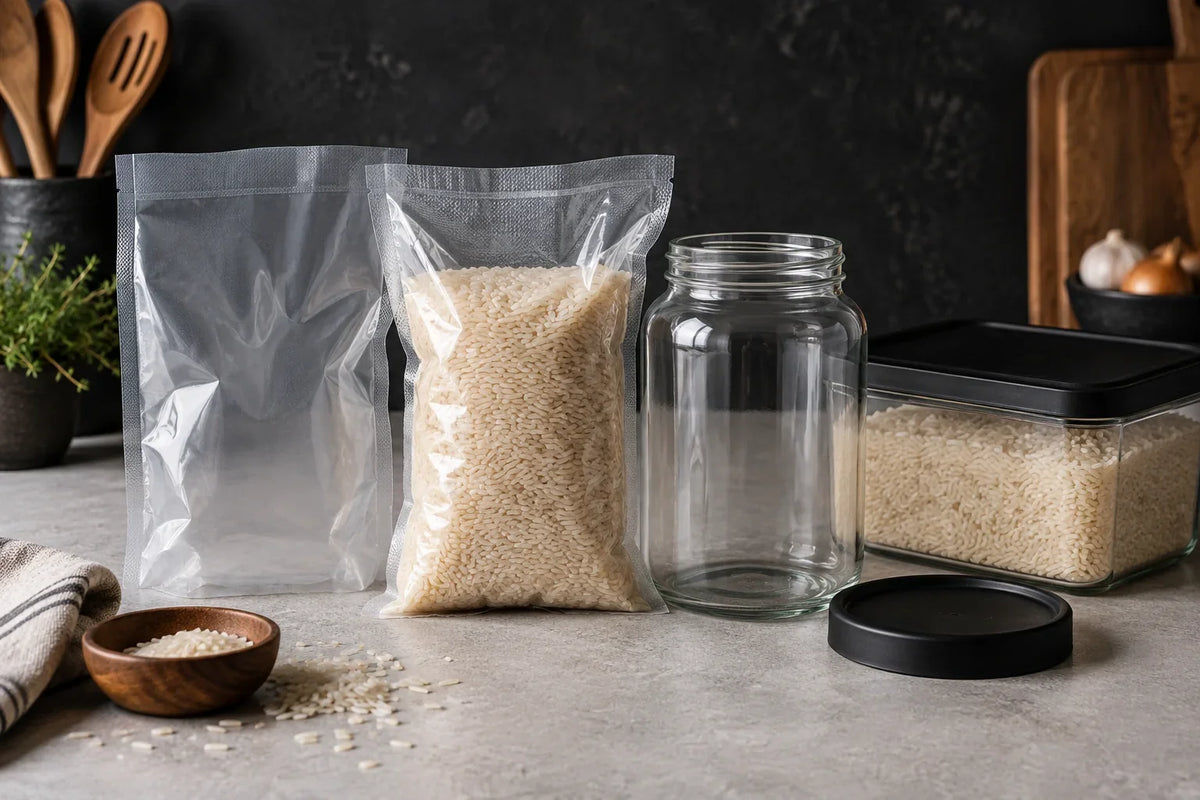
The right vacuum sealer depends on your most frequent task: for individually heat-sealed portions, a bag sealer is a natural choice. If you regularly process liquid foods in bags, look at suitable chamber sealers. For supplies in reusable jars and boxes, consider a matching container system.
Before comparing watts, vacuum pressure or accessory packs, note three foods you actually want to package, their usual quantities and storage locations. This helps you assess models much more precisely than asking for the single “best vacuum sealer”.
Our recommendation if you want to use jars you own: our EcoSeal Pro with its included AnySeal System lets you vacuum seal many suitable supermarket jars directly. Opened pesto stays in its original jar; empty, cleaned jars become containers for new supplies. You do not need to buy a new jar set first. See how this particular benefit works day to day.
Comparing bag, chamber and jar vacuum sealers
| System | Typical task | Check before buying |
|---|---|---|
| External (suction) vacuum sealer | Vacuum pack and heat-seal individual portions in bags. | Bag type, sealing width, handling moisture, cleaning and pauses between cycles. |
| Chamber vacuum sealer | Frequent vacuum sealing in bags; suitable models can also handle soups and sauces. | Usable chamber dimensions, permitted fill level, weight, maintenance and space. |
| Jar or container vacuum sealer | Close supplies and portions in suitable reusable containers. | Compatible lids, adapters, container sizes and replacement parts. |
The terms sometimes overlap: some bag sealers also have a container connection. A small handheld device may belong to a valve-bag or container system. What matters is an explicitly approved connection with matching accessories.
When does a bag vacuum sealer suit you?
With an external sealer, the open side of the bag rests at the machine. After air is removed, the bag is heat-sealed. This is a straightforward process for separate portions you will unpack completely later. Bags must suit the model; many external sealers use textured film.
Consider portion size when buying. Sealing width limits the bag width you can use. A film roll can be practical for different portion lengths, but needs space and extra steps. Include replacement film and reuse instructions in your decision.
Liquids need particular care: suction can draw them towards the machine. A moist-food mode does not automatically allow you to package liquid soup. TÜV SÜD describes this design and important buying criteria, including liquid separators and pressure regulation. Read the specific equipment instructions before buying.
When does a chamber vacuum sealer make sense?
Here, the bag goes inside a closed chamber. The pump reduces chamber pressure, then the bag is heat-sealed. Suitable models can also process liquids. As a manufacturer example, CASO describes this use for its VacuChef 70 with moist and liquid foods.
Consider this design if you often prepare large batches or specifically want to portion soups and sauces in bags. Usable chamber space is crucial: does your usual portion fit completely inside? As well as width, depth and height, consider bag position and permitted fill quantity in the instructions.
For an occasional jar of oats, this would usually be an unnecessary purchase. For many similar bag portions, a fixed workstation can make sense. Plan space with the lid open and the route from saucepan to packaging; an empty worktop alone does not answer every space question.
When does a jar and box vacuum sealer suit you?
A jar or container system suits a kitchen where you prefer rigid containers: serving an ingredient with a spoon, opening a portion or cleaning the container for its next use. The container keeps its shape. It needs a suitable airtight closure and the correct connection to the sealer.
What makes EcoSeal Pro special: turn your existing jars into a vacuum system
We believe a vacuum sealer belongs where your food already is. That is why AnySeal is included as standard with our EcoSeal Pro. With the included adapter and suitable AnySeal Lids, you can vacuum seal many suitable containers from your kitchen. You are not limited to our own jars.
Opened pesto? It stays in its original jar.
Open the pesto, serve some with clean utensils, clean the rim and position a suitable AnySeal Lid: with the AnySeal Adapter in EcoSeal Pro, you vacuum seal the suitable original jar directly. No transferring, no extra storage jar. The same principle works with suitable jars of pasta sauce, curry paste, horseradish or spreads, for example. Follow fill-level and operating instructions; storage and consumption instructions after opening still apply. Vacuum sealed again does not mean unopened again.
Empty jar? Ready for another use.
A suitable, cleaned and completely dried jar that once held pasta sauce or jam can hold your next dry supplies. With EcoSeal Pro and its AnySeal System, vacuum seal it again using a suitable lid. Build on what you already own.
Our reason to choose EcoSeal Pro: reuse original jars without transferring food and give existing jars a second life, with a cordless, fully automatic device. If that is the routine you want, we recommend our EcoSeal Pro.
Already included: AnySeal Adapter and three AnySeal Lids. Opening, sealing surface and container must be suitable; check the combination here. Alternatively, use compatible Seal it! jars directly with their intended original lids.
This solution is particularly interesting if you prefer using food from rigid containers. For regular heat-sealed bag portions, you need equipment designed for that purpose. Also check whether the planned jars fit your shelves: a narrow shelf, a low fridge shelf and a drawer have different requirements.
Three kitchens, three different choices
“I want to prepare meals in individual bags.”
Start with bag sealers and the type of food. Dry or solid portions have different requirements from liquids. If you plan to cook in a water bath later, bags and method must be suitable. A jar-sealing system is not a substitute for equipment designed to seal bags.
“I want to use opened food in jars.”
This is where our EcoSeal Pro with its included AnySeal System is particularly useful: an opened spread can stay in its suitable original jar, and an empty jar can hold new supplies later. Check existing containers first rather than automatically buying a new set. Our guide Which jars are suitable for vacuum sealing? explains compatibility.
“I often cook soup for several portions.”
Decide on storage first: eat soon from the fridge or freeze appropriately? Then choose between approved containers and a chamber system suitable for liquids. The question of the right preservation method comes before the equipment question.
Five buying criteria that matter day to day
- Your actual portion size. Measure a typical portion with its packaging. Bag width, chamber height or jar opening must suit it.
- The complete starting setup. Compare the sealer plus necessary packaging, lids and adapters. An inexpensive accessory set is not automatically a complete system.
- Cleaning and care. Check which parts can be removed and how to clean them. This matters particularly if you transfer food often or process moist ingredients.
- Supplies and spare parts. Are matching bags, seals or lids available? Which components actually need replacing when worn?
- Fitting it into your routine. Where will the sealer stand, where will packaging be stored and how quickly is everything ready? A suitable location makes regular use easier.
Compare the total cost for your planned setup, such as a sealer plus ten portion containers you actually need. You do not need a forecast of savings over years. A specific shopping basket already shows whether a system suits your budget and space.
A stronger vacuum is no shelf-life guarantee
A technical performance figure does not replace food hygiene. Vacuum sealing does not sterilise or make a refrigerated meal shelf-stable. The BfR explains the risks of unsuitable low-oxygen storage. Plan consumption and storage independently of equipment promises.
Our introduction to vacuum sealing food explains what it can do and its limits. If your real aim is long-term supplies without refrigeration, you first need a suitable preservation method.
Frequently asked questions about choosing a vacuum sealer
Which vacuum sealer is best for beginners?
One whose system suits your most frequent task. Start with a clear use and manageable accessories. An extensive feature list helps little if you mainly need a different packaging type.
Can every sealer vacuum seal jars?
No. This requires an explicitly suitable connection, matching containers and closures. An accessory port alone does not establish compatibility with every jar.
Can you vacuum seal without bags?
Yes, with a suitable jar or container system. Reuse containers and lids according to the manufacturer's instructions. Check fit, cleanliness and undamaged condition.
Our conclusion: choose by packaging; for jars, EcoSeal Pro
Want to vacuum seal directly in suitable supermarket jars and reuse existing jars? We recommend our EcoSeal Pro for that. Its included AnySeal System enables both everyday benefits. The adapter and three lids are already included; cordless, automatic operation complements the system.
For individually heat-sealed bag portions, a bag sealer is more suitable. If you regularly process liquids in bags, consider an appropriate chamber sealer. Choose the system that meets your actual needs.
Choosing jars? Select your EcoSeal Pro on the product page and check the current contents there. Our jar vacuum-sealing guide explains the process before your first use. For shallow portion containers, explore AnySeal Boxes; note the adapter combination they require.
More ideas for everyday life
You might also enjoy
Vacuum sealing
Vacuum sealing food: benefits, suitable foods and limits
What does vacuum sealing really offer? Find packaging that suits your food and learn which storage rules still apply.
Read guide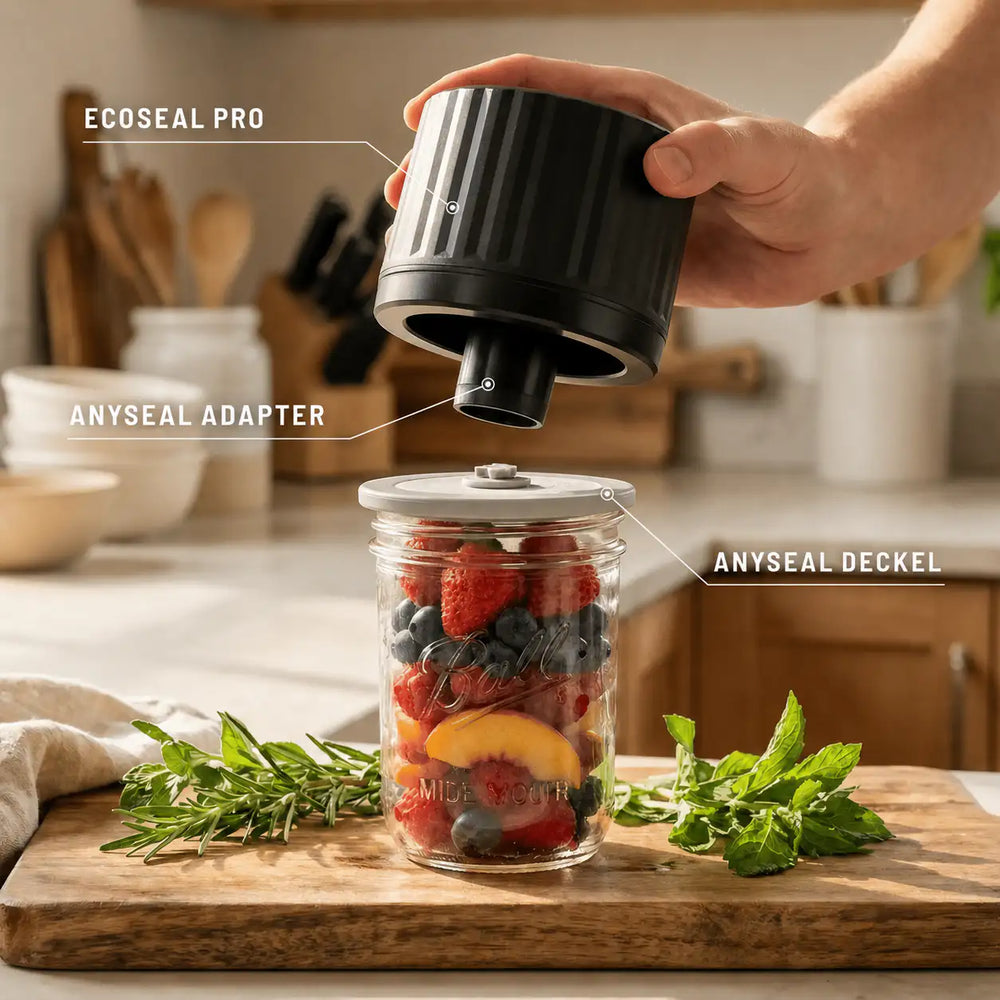
Jars & accessories
Which jars are suitable for vacuum sealing?
Not every screw-top jar automatically fits. Compare containers, lids and adapters to find the combination you actually need.
Read guide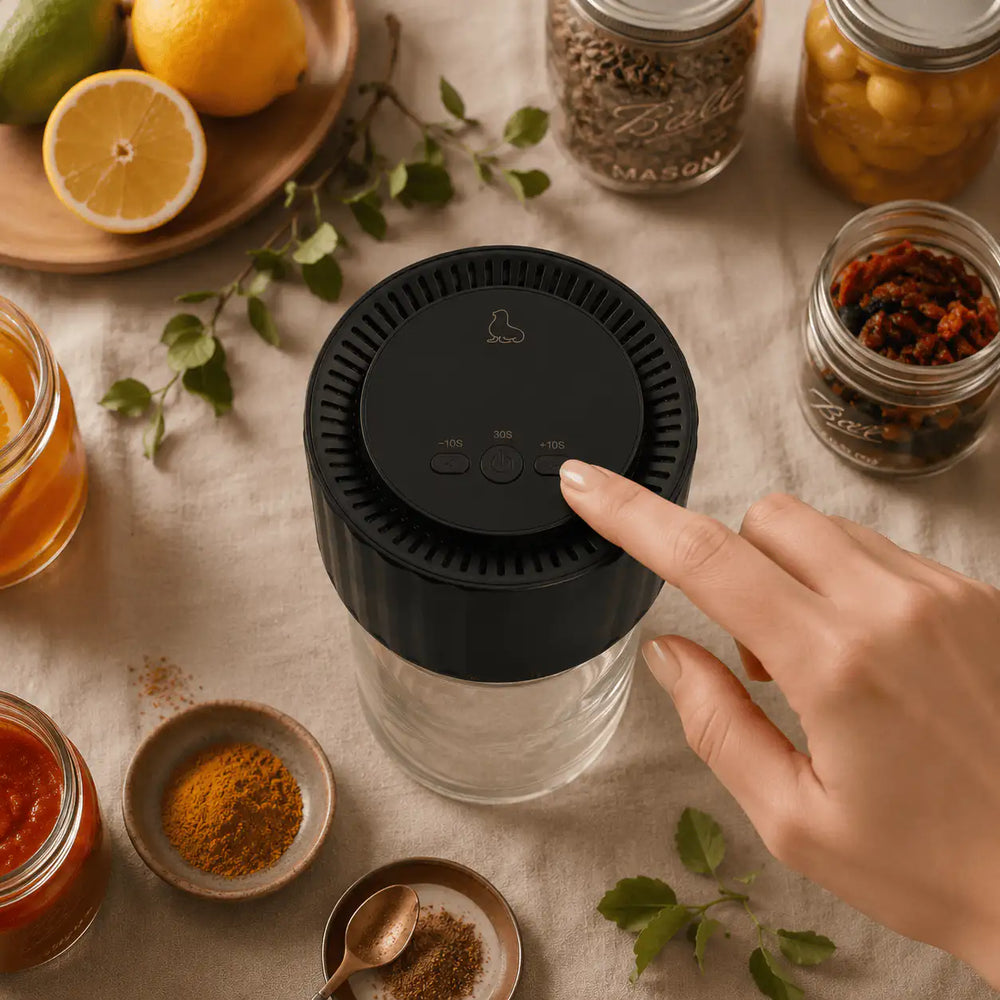
Vacuum sealing
Vacuum sealing jars: a guide for everyday cooking
From the right lid to correct storage: make vacuum sealing jars a simple routine, with clear limits for safe food storage.
Read guide