

Seal it! Guides
Choosing yogurt starter cultures: natural, Greek-style or kefir?
The right culture starts with the result you want. Learn how to match your starter, base and preparation method.
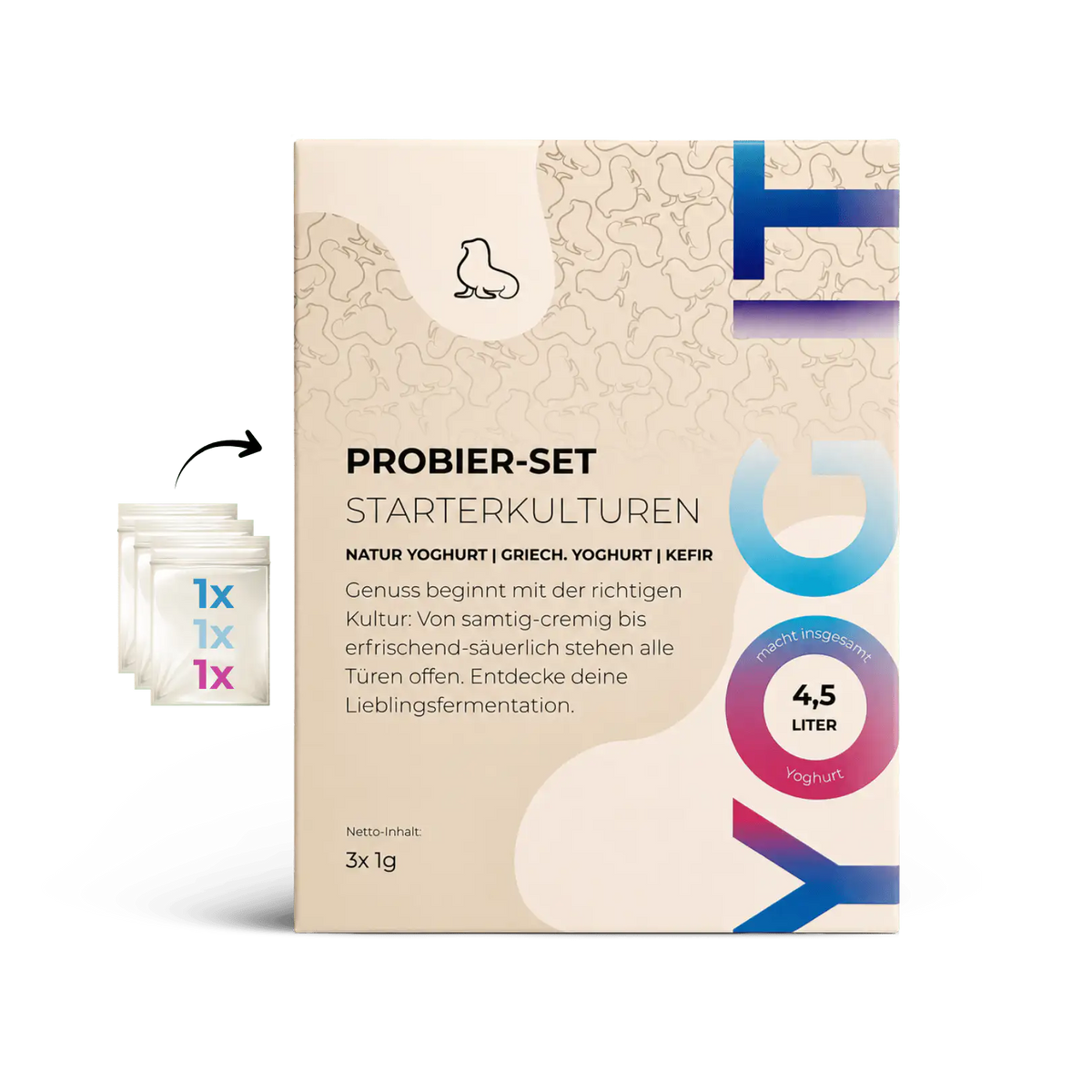
Creamy natural yogurt, thicker Greek-style yogurt and drinkable kefir need different starter varieties. The intended milk base and the correct preparation also matter. Choose a culture for its intended use, rather than the longest list of bacteria names on the pack.
For the whole process, from heating the milk to chilling, see our basic homemade yogurt guide. You can then choose a culture for the result you want.
We recommend our Yog it! starter cultures if you want portioned starters for natural yogurt, Greek-style yogurt or kefir. The criteria below help you choose; specific preparation instructions relate to the individual culture.
Do I need starter powder, or will natural yogurt do?
Some recipes use suitable natural yogurt with live cultures, while others call for a specific dry starter. Utah State University describes both options in its yogurt guide. This does not mean that every purchased culture should be reused indefinitely. Read the Utah State University guide.
The Yog it! help page classifies our starters as direct-set cultures: they are intended for fresh use with each batch. If you want results you can evaluate reliably, use them as intended. Saving part of an old batch without suitable instructions and safe handling is not a useful shortcut.
What would you like to make?
The following information applies specifically to our Yog it! starters, not to all cultures on the market. For beginners, the online help specifies UHT whole milk with 3.5% fat. The product page states that each pack contains three 1 g sachets, with 1.2 litres per sachet.
| Variety / base | Dosage and pack size | Temperature / fermentation time | Fresh starter per batch / use |
|---|---|---|---|
|
Natural yogurt UHT whole milk, 3.5% fat |
1 g per 1.2 l; 3 sachets = 3 batches, approximately 3.6 l in total | 40–43 °C; 6–8 hours | Yes, direct-set; for breakfast and muesli |
|
Greek yogurt UHT whole milk, 3.5% fat |
1 g per 1.2 l; 3 sachets = 3 batches, approximately 3.6 l in total | 40–43 °C; 6–8 hours | Yes, direct-set; for dips, strain after chilling if desired |
|
Kefir UHT whole milk, 3.5% fat |
1 g per 1.2 l; 3 sachets = 3 batches, approximately 3.6 l in total | 30–32 °C; 12–14 hours | Yes, direct-set; a fermented milk drink, not yogurt |
These are the currently published online instructions. During fermentation, leave the jars open or cover them only with loosely placed lids; put the maker's cover on. A variety name does not guarantee a firm consistency; milk, processing and chilling also play a part.
A trial set is also available. The product information we reviewed does not clearly state how its three sachets are divided between the varieties. To be sure of getting your chosen culture, we therefore recommend the named individual variety to start with.
The culture and base must work together
Before buying, check what the starter is intended for. A cow's milk recipe is not automatically suitable for oat, almond or other plant-based drinks. Their compositions differ, and the desired gel structure does not form in the same way with every base. For plant-based batches, use a culture explicitly suitable for that purpose and instructions for that exact application.
Check suitability and preparation instructions for lactose-free milk too. “Lactose-free”, “dairy-free” and “vegan” describe different properties. If you need to exclude ingredients because of an allergy, check the ingredient list and allergen labelling of both starter and base. The word “culture” tells you nothing about this.
A consistent starting point helps with your first attempts: the same milk, batch size and starter. Once you like the result, a planned comparison makes sense. This avoids ruling out a culture too quickly when you have changed the base at the same time.
Read these details before starting
Dosage, base and fermentation conditions for our starters are specified above. The online product information we reviewed does not include a full ingredient/allergen list for each variety, storage conditions for opened sachets or a complete recipe tailored to particular plant-based drinks. Do not infer these details from the product name.
If you have allergies, check the current labelling before buying. Smaller batches require accurate measurement of a portion of the starter and instructions for storing the remainder; for beginners, one full 1 g sachet for 1.2 litres is simpler.
Why yogurt and kefir need different settings
The culture helps determine the conditions needed. Do not transfer a natural yogurt setting to kefir without checking. Our Yog it! help page gives separate instructions for the varieties and explains how to cover the jars during incubation.
The Yog it! has an adjustable temperature range of 20–50 °C. Within that range, choose the value specified in your instructions. A higher temperature is not a general shortcut to faster preparation. Nor does a longer running time automatically make a batch better or safer.
Include the fridge in your plan. After the specified fermentation, chill the batch as instructed. Only assess the consistency once it is thoroughly chilled. Add fruit, honey and other ingredients to individual portions afterwards, rather than combining several variables on your first attempt.
Comparing two cultures fairly
Keep milk, quantity and preparation the same, and note which culture you use. Compare flavour and texture only after thorough chilling. Change just one thing in the next attempt, within each culture's instructions.
Which variety is a good starting point?
Start with our natural yogurt starters
For muesli and breakfast, we recommend natural yogurt. You get portioned starter for three fresh batches. For dips, choose the Greek variety; once your yogurt has set successfully and chilled, you can strain it. For smoothies and dressings, the kefir starter has its own temperature requirements.
Alternatives: View Greek starter · View kefir starter.
You also need suitable milk, clean jars and a suitable way to maintain temperature. See the Yog it! instructions for the process. Recipe ideas: tzatziki and berry kefir smoothie.
Read more: yogurt maker buying guide.
More ideas for everyday life
You might also enjoy

Yogurt
Preparing breakfast: 5 ideas for relaxed mornings
What can you do at night, and what is better kept fresh? Five breakfast ideas with example quantities, separate toppings and less morning effort.
Read guide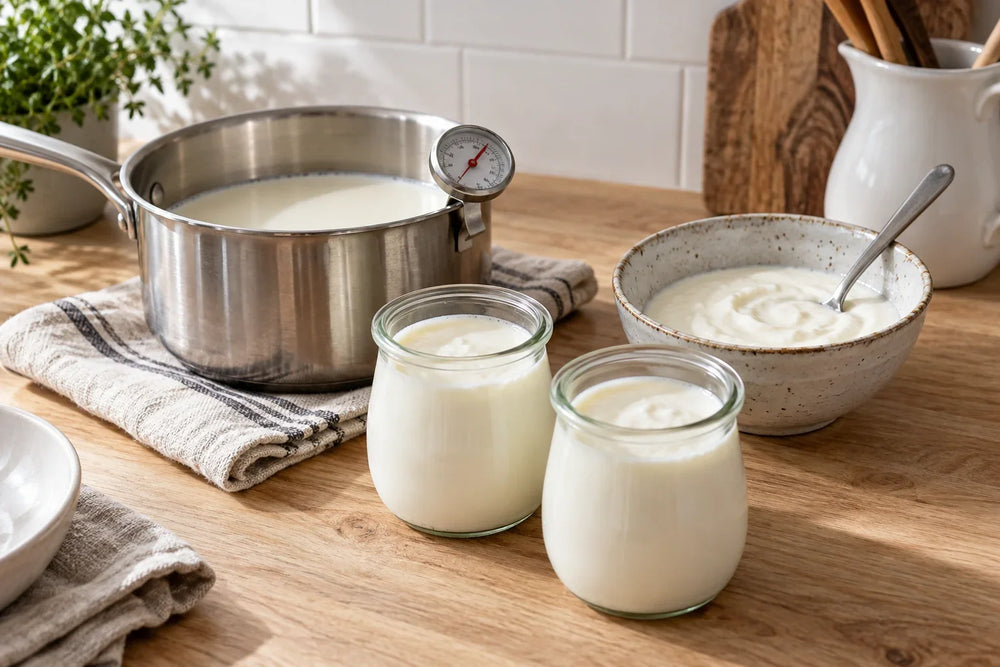
Yogurt
Making yogurt at home: with and without a yogurt maker
Milk, a suitable starter and steady warmth: start making your own natural yogurt, with or without a maker.
Read guide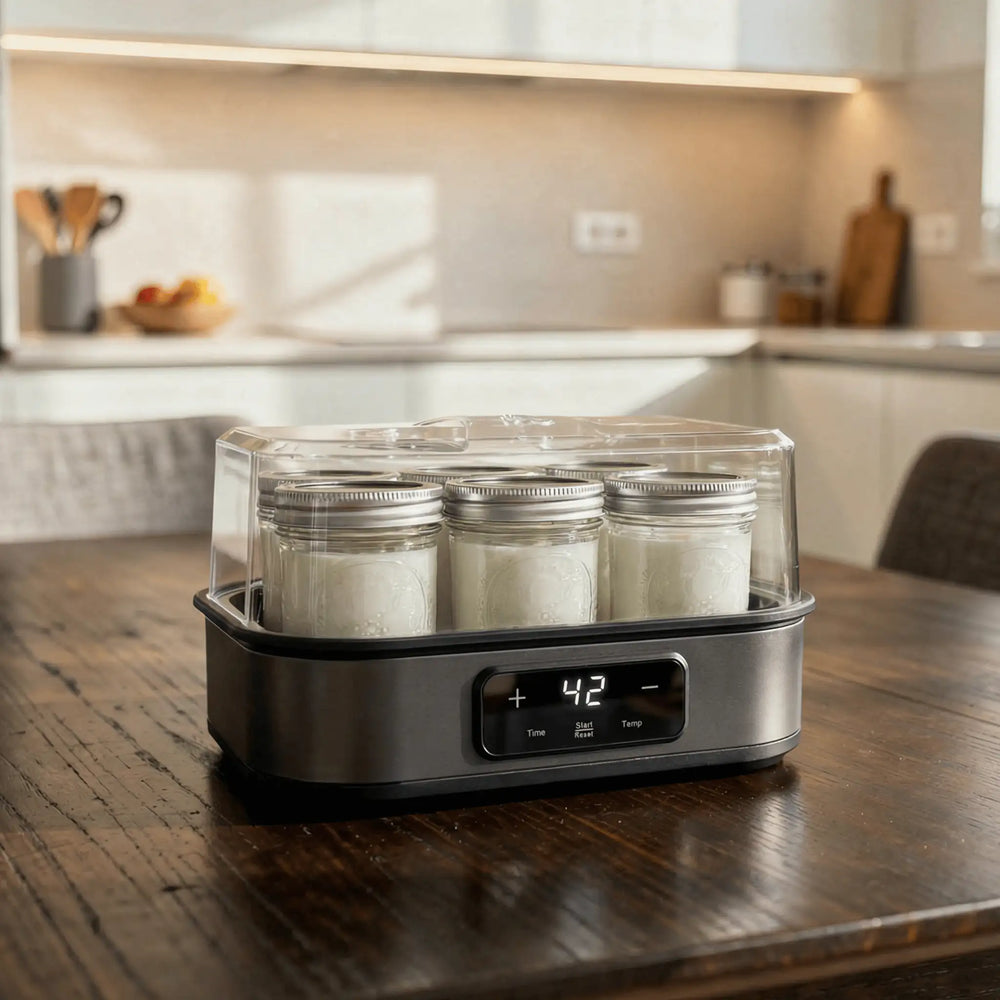
Yogurt
Yogurt makers: when are they worth it, and what should you look for?
For regular yogurt eaters, there is more to consider than the number of jars. This guide helps you choose a maker that fits your kitchen.
Read guide