

Seal it! Guides
Storing coffee correctly: beans, grounds and the fridge question
Pack size, a dry storage location and a pack that closes securely matter for your coffee. Learn why expert sources disagree about the fridge.
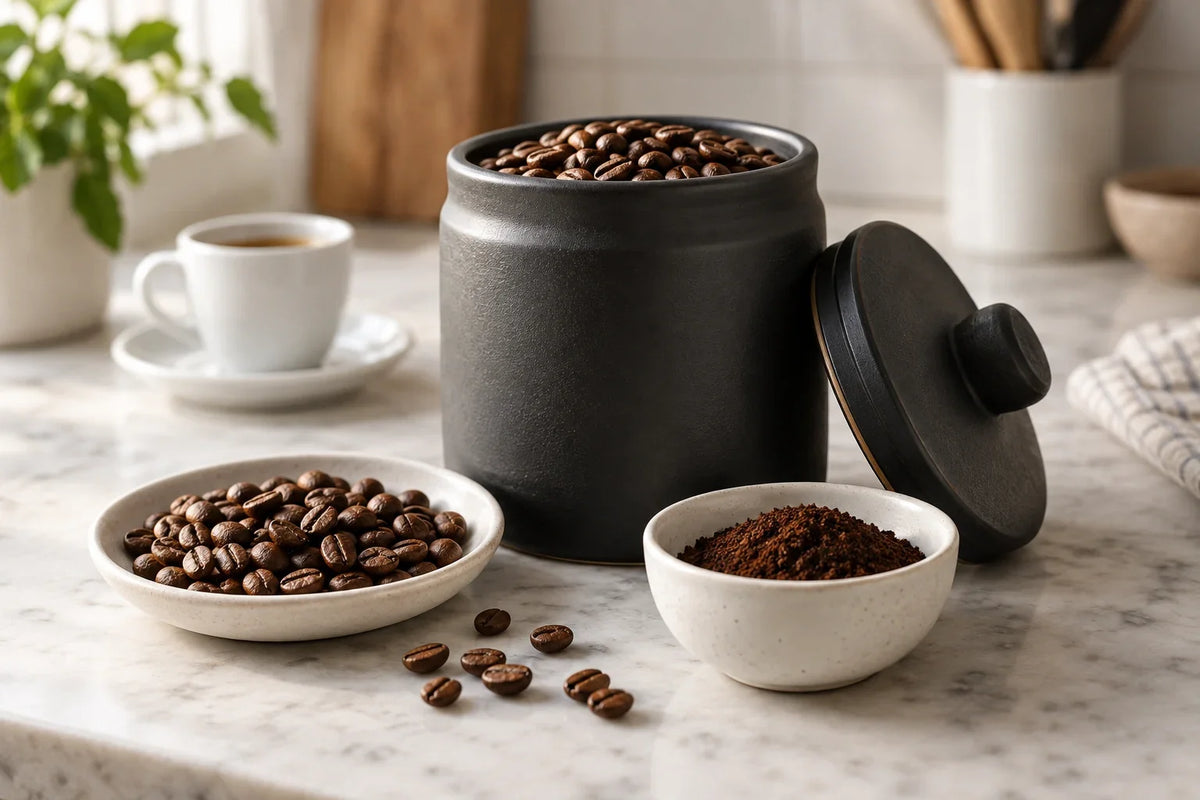
Protect opened coffee from light, moisture, heat and other odours in well-closed packaging. A dry, dark kitchen cupboard is practical for daily use. Where possible, keep coffee in its resealed original packaging inside a suitable container. Whole beans and ground coffee need slightly different attention.
There are different recommendations about the fridge. Rather than presenting one as an undisputed rule, consider how you use coffee and what your equipment manufacturer specifies.
Whole beans or ground coffee: what is the difference?
Whole beans retain aroma better than coffee already ground. If you have a suitable grinder, grind only what you need just before brewing. You do not have to switch from ground coffee, though: buy a pack size suited to your actual consumption and close it after every use.
The BZfE explicitly distinguishes beans from grounds. A best-before date also does not tell you how long an opened pack will taste equally aromatic. Unopened-pack information is no freshness promise after opening.
For example, your recipe uses 15 g per cup and you drink one cup daily. A 250 g pack gives about 16 portions. A small pack may suit you better than a kilogram bag. This helps planning; it does not state how long coffee stays fresh.
Leave original packaging inside the container
First check whether the bag reseals. If not, roll the opening neatly and secure it. A container that closes securely provides an extra layer of protection. This avoids repeated transferring and retains product information such as variety, grind and roaster instructions.
If you choose another container, it must be clean, completely dry and odour-free. An old pickle jar is suitable only once its lid no longer smells either. Clean containers between fills and dry thoroughly. Do not keep pouring new beans onto leftover beans that stay at the bottom indefinitely.
A transparent jar on a sunny worktop does not protect against light. Put it in a closed cupboard. A spot beside the cooker, kettle or dishwasher is also unsuitable because of heat and steam.
Does coffee belong in the fridge?
Sources disagree: the German Coffee Association recommends keeping the opened pack in an airtight container in the fridge. The BZfE also mentions this option. This specifically means protected packaging, not an open bag beside other foods.
The Bavarian consumer advice centre instead favours a cool pantry, citing other odours and condensation from temperature changes as drawbacks. Appliance manufacturer De’Longhi warns about bean moisture and potential grinder problems.
For a pack opened daily, we therefore recommend a dry, dark place outside the fridge. This is a practical assessment of that guidance, not a claimed consensus among all expert sources. For beans, pay particular attention to your grinder or bean-to-cup machine instructions. Coffee storage advice does not replace equipment requirements.
Keep small amounts ready and the rest sealed
Fill your machine's bean hopper according to use and follow the manufacturer's instructions. Keep the remaining supply closed. If you drink one variety at weekends and another during the week, label both packs rather than opening a third in advance.
Keep measuring spoons dry. A spoon just used for water or rinsing a filter should not go straight into the coffee pack. Take what you need, close the coffee and then prepare it. This avoids leaving the bag open throughout breakfast.
A similarly simple routine works for other breakfast ingredients. Find specific ideas in preparing breakfast.
What if you bought far too much coffee?
Freezing may be an option for a larger surplus; the consumer advice centre specifies airtight packaging. Divide into sensible portions first rather than repeatedly opening one large pack. For beans and your grinder, follow the relevant manufacturer instructions. Moist beans do not belong in the grinder.
Your normal daily supply does not need another ritual. Buying a suitable quantity and consistently closing the pack are simpler starting points. Unlike perishable leftovers, the main concern here is preserving aroma; still, do not use coffee affected by mould or moisture.
Prefer storing dry beans in a jar? We recommend our Ball Mason Jars. Choose a size for your usual quantity. Wide Mouth versions make filling and serving easier; the glass shows what remains. Put the jar in a closed cupboard for light protection and keep jar and lid dry and odour-free. Find available sizes here. If you leave coffee in its original packaging, the container described above remains a good extra outer layer.
Find more practical labelling and arrangement advice in organising pantry food in jars.
More ideas for everyday life
You might also enjoy
Shelf life
Keeping herbs fresh: storing basil, parsley and chives correctly
Half a bunch of parsley need not disappear in the vegetable drawer. Learn which herbs need chilling, why basil is different and how to use up any extra.
Read guide
Shelf life
Helping raspberries keep longer: refrigerate or freeze?
Fresh for tomorrow or stored in the freezer? Protect delicate raspberries from pressure and prepare them for their intended use.
Read guide
Shelf life
Organising your fridge: 5 tips for a clearer view
Good organisation starts with temperature and visibility. These five tips help you find opened food and put shopping away sensibly.
Read guide